
We keep trying to “demystify” AI, but I think mysticism actually offers productive ways of knowing and engaging with AI.
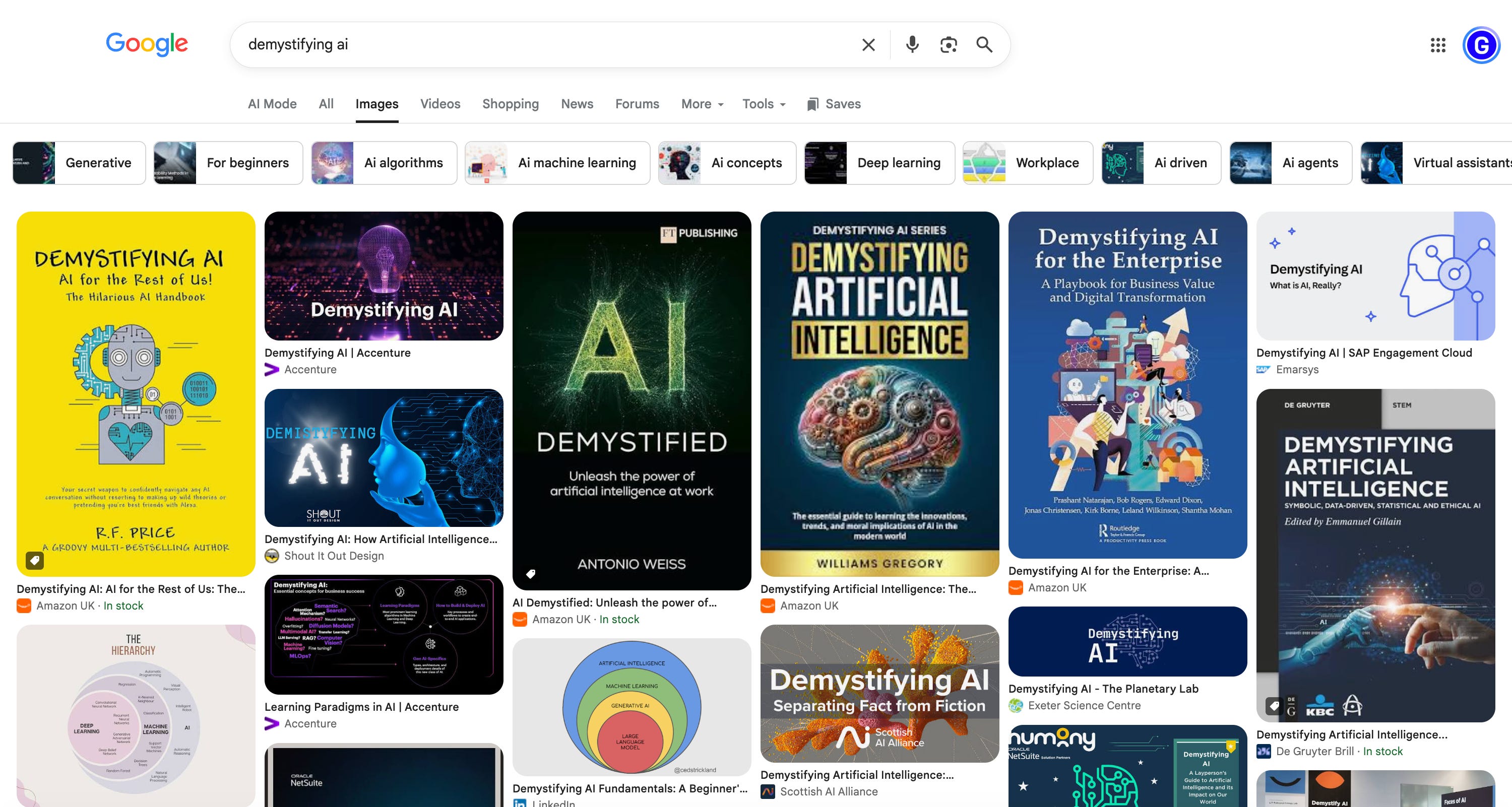
Google image results for “demystifying AI”, 2026
Turning on the lights at the Séance
My original thesis title and proposal contained the phrase “demystifying the black box”. Both “demystifying” and the metaphor of the black box treat AI’s main problem as opacity, the difficulty of understanding how a system produces its answers, or the obfuscation of its internal workings. This suggested opacity as one of the key focuses of my research, and by association, that “solving” opacity would resolve the main issues with AI today.
This framing understands the mystical as something hidden or misleading, which can be uncovered through explanation. There are good reasons to pursue this, particularly when AI interfaces create misleading impressions of what these systems can do, where intelligence is misattributed and a system is assigned anthropomorphic agency (Burgess, 2024).
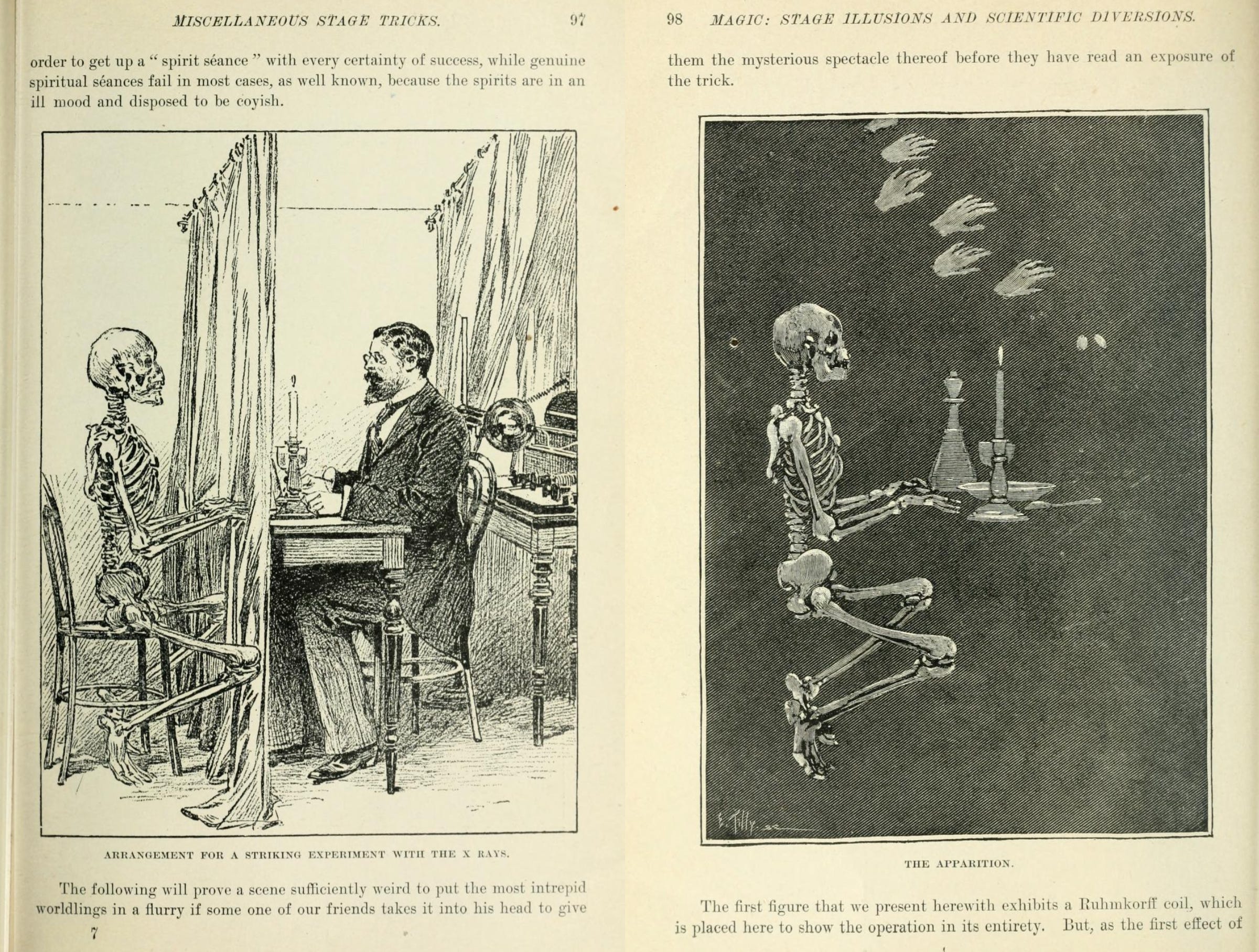
The Apparition, from Albert A. Hopkins, Magic: Stage Illusions and Scientific Diversions, including Trick Photography, 1897.
Yet explaining how a system works does not necessarily change how people understand or engage with it.
“What is the use of demystifying ideology … when there is widespread disillusionment …, when “everyone knows” that hidden forces are at work …?” (Felski, 2015, p. 45)
→ People can recognise the opacity of these systems and still rely on their answers:
“Part of the mysticism of neural networks is that they offer answers but not explanations. And for the most part, we don’t care—so long as the algorithm performs well on the test set. We consult neural networks like the ancients consulted oracles. The process may be esoteric and opaque, but if it gets results that’s good enough.” (Browne and Swift, 2018, p. 3)
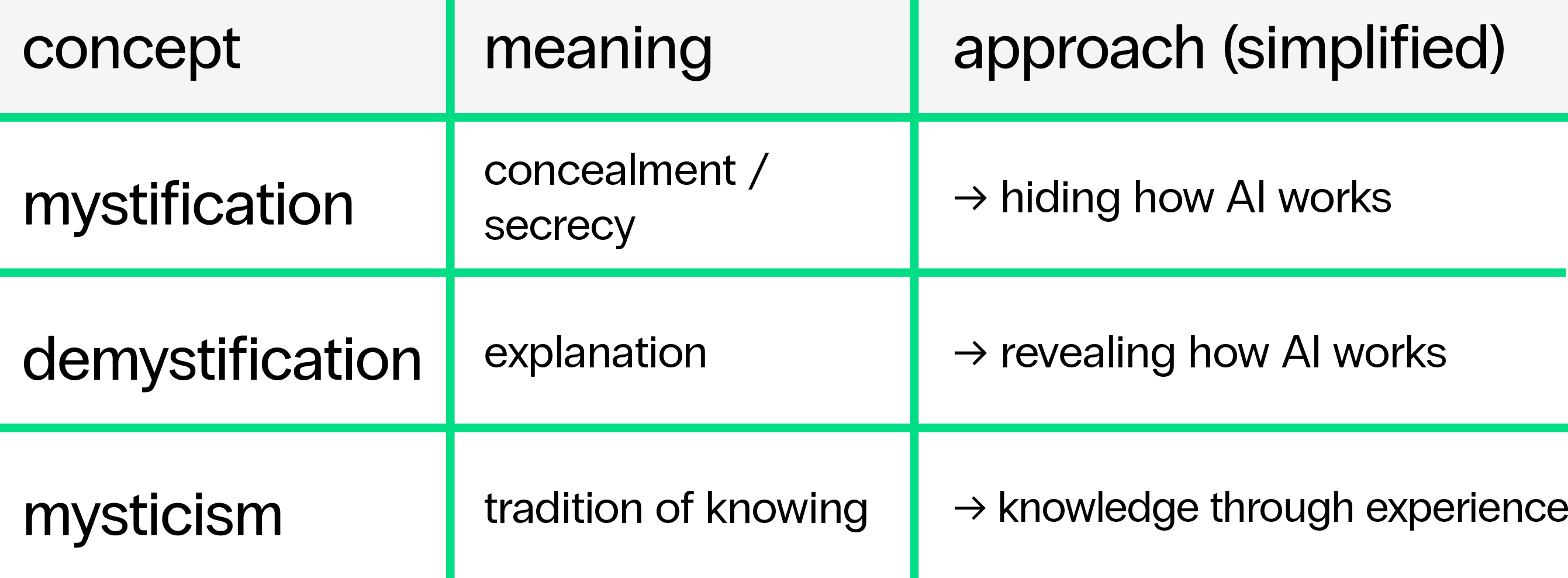
This association between mysticism and secrecy has partly etymological roots. The Ancient Greek mystikos refers to what is secret; mystes describes someone initiated into the mysteries.
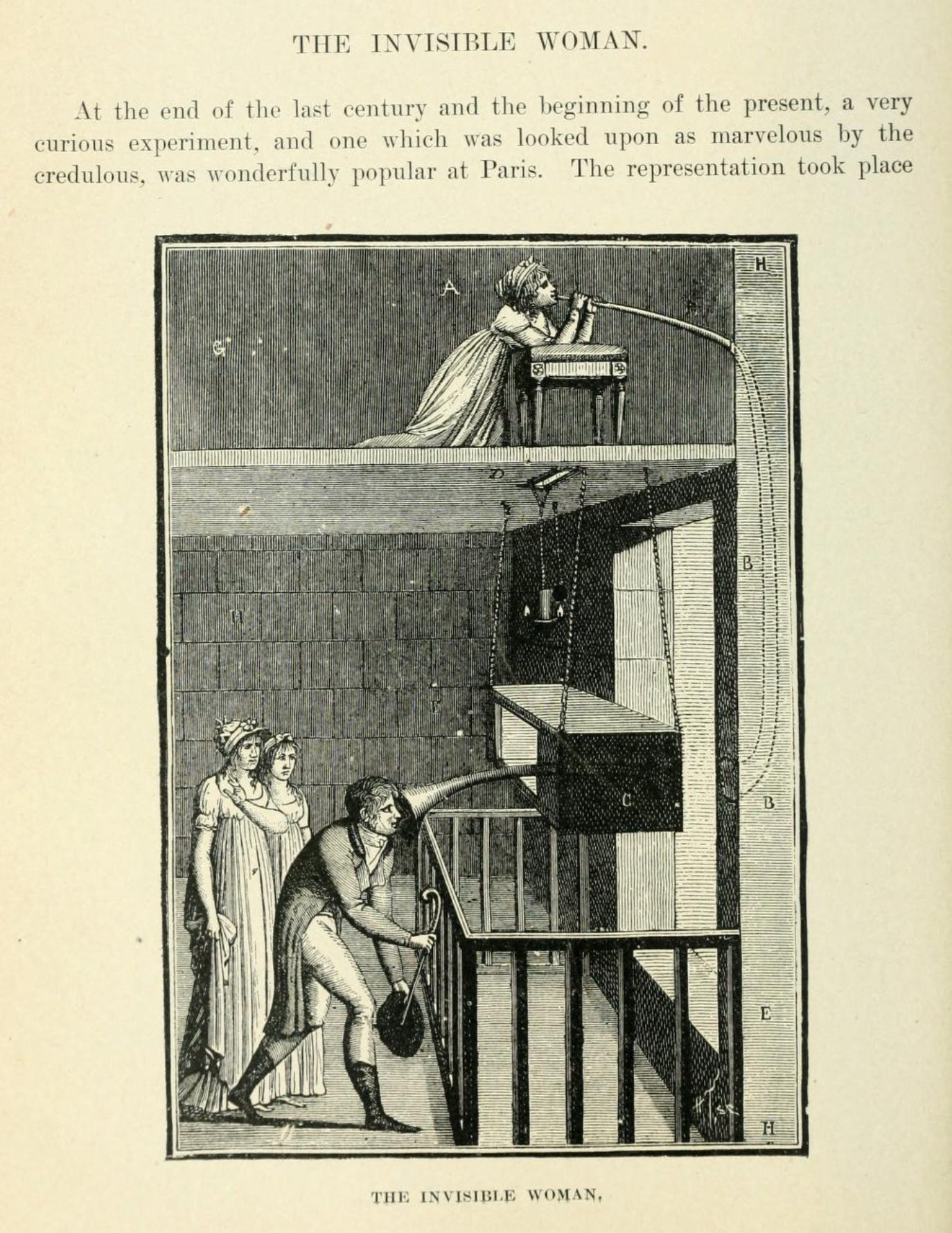
The Invisible Woman, from Albert A. Hopkins, Magic: Stage Illusions and Scientific Diversions, including Trick Photography, 1897.
The association of mysticism with concealment is connected to the suspicion around concealed labour and corporate interests within AI research, to the theatrical claims to autonomy of AI “agents”. Descriptions of AI as magical can place these systems “outside of understanding, outside of regulation, outside of responsibility” (Campolo and Crawford 2020, p. 9). Used in this explanatory sense, demystification has a clear ethical and political purpose. It supposes a revelation of the real labour and material costs hiding behind the ideal “magic standard” of effortless technology (Gell, 1992): notably the environmental impacts of AI infrastructure (e.g. construction of data centres, exploitation of rare earth minerals) and the human efforts that make the technology possible (e.g. the vast amounts of data needed for training, the human hours of reinforcement learning and moderation).
Mystification here can also name interface practices that induce users to misattribute capacities to AI. Demystification, then, would seek to prevent these harms, comparable to “turning on the room’s light” in a staged séance (Burgess 2024, p. 97).
Mysticism
But mysticism contains spiritual practices that actually offer ways of knowing that can be productive for AI. Mysticism has a specific history as a category of knowledge. In seventeenth-century Christianity, mysticism started to be described as a distinct field of knowledge and practice (de Certeau, 1992, p. 16). In Christian mystical writing, “experimental knowledge” could involve “a fulfilling passivity in which the self loses itself” in the divine (de Certeau, 1992, p. 13). Mystics also speak of “something” that cannot be expressed in words, with bodily sensations and affects providing a way to articulate the “unsayable” (de Certeau, 1992, p. 15).
“The mystical, then, appears in paradoxical forms. […] In one of its aspects, it is on the side of the abnormal, a rhetoric of the strange. In the other, it is on the side of an ‘essential’ that its whole discourse announces without being able to express. […] Thus, two contraries coincide in the expression ‘mystical phenomena’: what is ‘phenomenal’ appears and is visible; what is ‘mystical’ remains secret and invisible.” (de Certeau, 1992, p. 16)
What can actually be learnt from an experience that cannot be expressed, how can that knowledge be communicated? In an encounter with AI, the workings of a system can be studied, and its outputs observed. Yet these explanations leave open how a person experiences the encounter, what significance they attribute to it. This part of the encounter has social significance even (and perhaps especially) when it diverges from the technical model of the system.
Here, I use mystical epistemology as a methodological and critical approach toward this question. I will cover what this means theoretically, then touch upon an example in my own practice through BIRD, a webcam augury website and walk performance.

Rothschild Canticles, c. 1300, fol. 98r.
Technologists and mystification
AI practitioners occupy both sides of mystery.
People who work in AI have an ambivalent relationship with the limits of their knowledge. Mystification can describe both “the agentive action of bewildering someone else through crafty obfuscation” and “the patientive condition of being thus bewildered” (Ochigame and Jones, 2026, p. 3). AI developers can construct systems that mystify others while themselves experiencing “rapt contemplation of the mysterious” when confronted with outputs they cannot fully explain (Ochigame and Jones, 2026, p. 3). This ambivalence has also been explored through design approaches that “increase or decrease the perception of magic and enchantment” (Lupetti and Murray-Rust, 2024, p. 1).
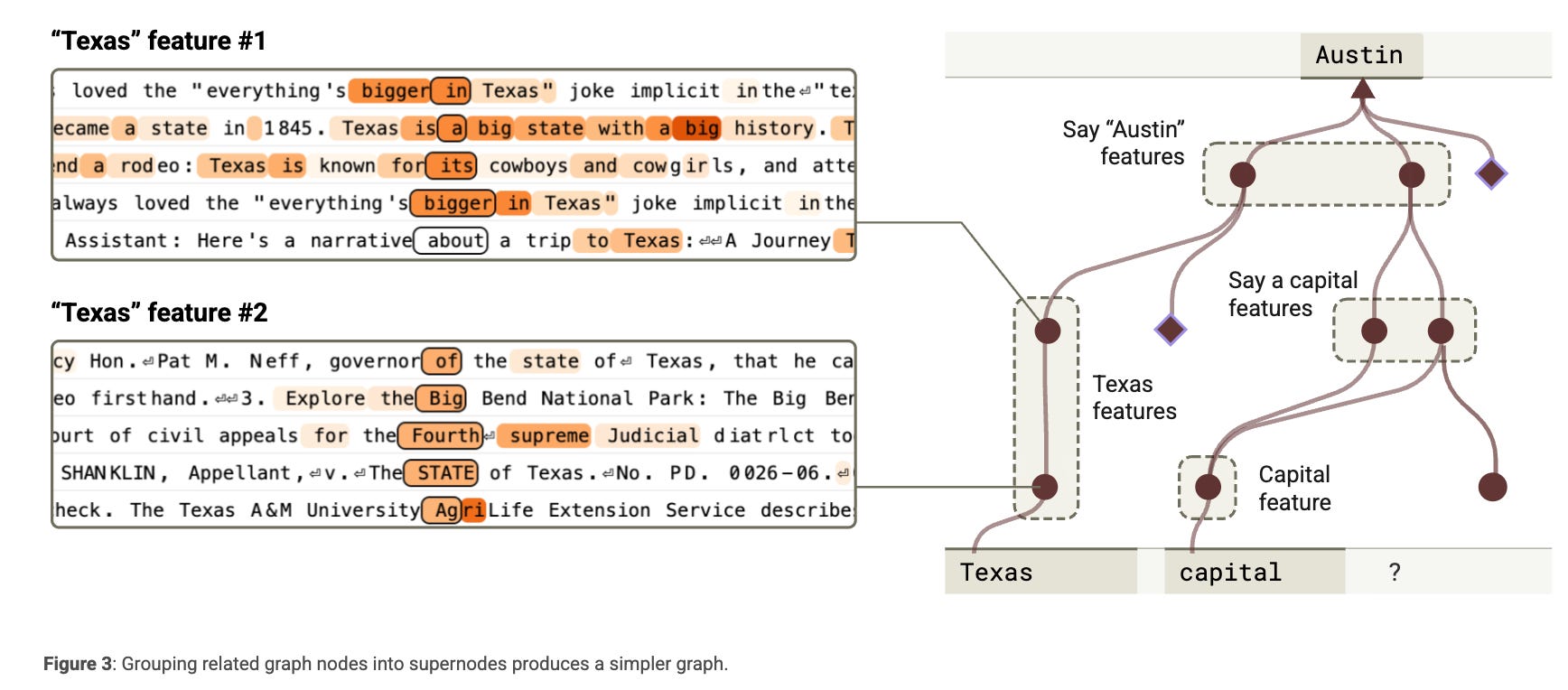
Attribution graph, On the Biology of a Large Language Model, 2025.
Explainable AI (XAI) and interpretability research often seek to make these systems more understandable. Yet research into the reliability of these methods reveals limits to what their explanations can tell us. Some feature-attribution methods, which attempt to identify how much each part of an input contributes to a model’s output, can “provably fail to improve on random guessing for inferring model behavior” (Bilodeau et al., 2024, p. 1). Mechanistic interpretability, which investigates the internal computations of neural networks, can also produce “many incompatible explanations” for the same behaviour (Méloux et al., 2025, p. 9).
Attempts to interpret model behaviour can themselves renew this sense of mystery. Each explanation can suggest “still deeper layers that defy understanding”, with opacity becoming “available as an object of ever-renewed interpretation” (Ochigame and Jones, 2026, p. 11).
Enchantment and disenchantment can therefore coexist within a (de)mystifying encounter.
The revelation of concealment
Yet the mystical should not be flattened into a single understanding of AI as unknowable. Equally, opacity in AI is not necessarily one phenomenon, nor is it always inherent to the models themselves. Burrell (2016) distinguishes three forms of opacity:
Intentional corporate or state secrecy
Lack of technical literacy
Opacity arising from the characteristics and scale of machine learning itself
These suggest different approaches to (de)mystification. These are not straightforward equivalents to the divine and transcendental unknowability of mysticism. Current unknowability of the models does not have the same consequences as designed obfuscation; mystical qualities may be contingent (e.g. proprietary models), temporary (current limits of explainability) or, potentially, inherent (limits to human understanding?). Hence the political implications and potential interventions differ. But these forms of opacity can all contribute to the shared experience of interacting with an AI model. Even contingent forms of obfuscation are experienced in the world and warrant critical understanding without reduction to the conditions that produce them, particularly when they cause harm. (de)mystification here does not mean taking the interaction at its word and surrendering to its opacity; it does not negate the important work of understanding the material and human costs of the technology. It means recognising that the opacity itself forms part of how the interface is shaping the experience and social role of the technology.
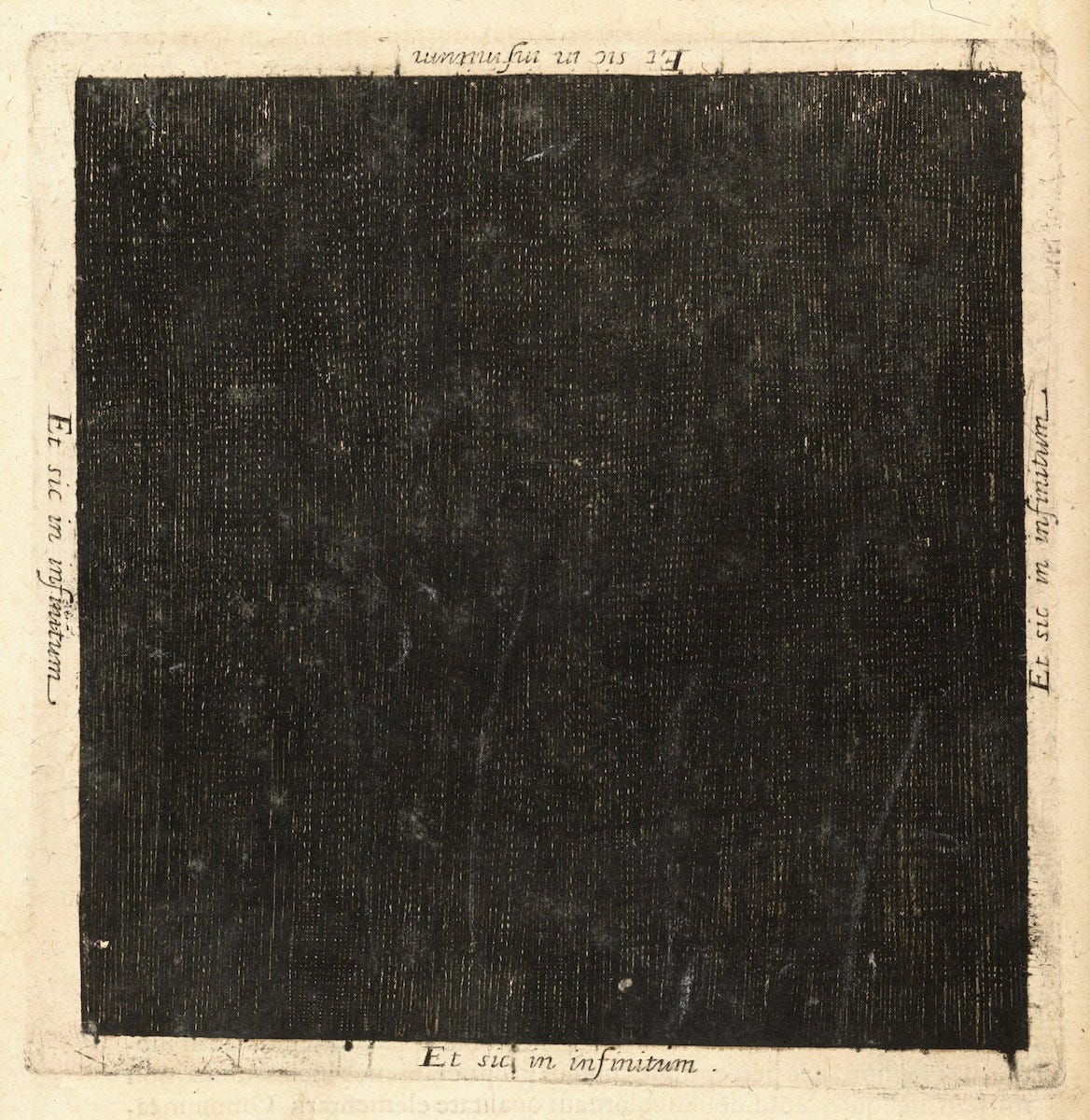
Robert Fludd, Utriusque cosmi, 1617.
But what happens when something hidden is revealed? Does exposing a mechanism necessarily bring an end to its mystery? The act of exposing a trick can itself become part of the ritual’s operation:
“The real skill of the practitioner lies not in skilled concealment but in the skilled revelation of skilled concealment. Magic is efficacious not despite the trick but on account of its exposure. The mystery is heightened, not dissipated, by unmasking and in various ways, direct and oblique, ritual serves as a stage for so many unmaskings. Hence power flows not from masking but from unmasking, which masks more than masking does.” (Taussig, 2003, p. 273)
Ritual can integrate and co-opt scepticism and the exposure of its own mechanisms. Revealing a trick may even strengthen its power, as the act of disclosure becomes part of the experience of magic. The revelation of a “trick”, and the coexistence of faith and scepticism surrounding this “public secret”, contribute to magic's “mysterium tremendum” (its overwhelming experience of otherness/power/awe); they are co-constitutive. In Taussig’s example, drawing from Evans-Pritchard's research in the Azande, an initiate is initially shaken by the ethnographer’s revelation of a ritual’s “deception”, but later resurfaces with new confidence because of, not in spite of, this revelation. This complicates what it means to (de)mystify. Explaining a mechanism can change how it is understood, but open other aspects of the encounter to interpretation. Revealing and exposure can themselves become a source of mystery, which I’d argue is the limit of an approach that relies solely on “demystifying”.
Unknowing
Apophatic thought engages with a duality of knowing that simultaneously holds mystery and knowledge. Often described as “negative theology”, apophatic thought concerns the limits of what can be known or expressed about the divine. It allows for an “unknowing knowledge” that remains partial (Yadav, 2016, p. 39). In apophatic traditions, these limits have a role in the practice of knowing itself. Divine ineffability is accompanied by “theological ignorance”, which can “inform the task of theology and transform the theologian” (Yadav, 2016, p. 17). Knowledge can therefore change the person who seeks it, even when its object remains beyond complete understanding. Not-knowing here is itself a way of knowing.
Applied to AI, this offers a way of considering what can be produced through partial knowledge. An explanation may reveal something about a system without exhausting what can be learned through an encounter with it.
Wider mystical thought, then, describes forms of knowledge that are experiential and transform the relationship of the knower to the object of knowledge. These approaches do not aim to exhaust the object in question (de Certeau, 1992; Schmidt, 2003).

Hildegard of Bingen, frontispiece to Scivias, twelfth century
(de)mystifying in practice
I propose (de)mystifying AI as an approach, informed by these epistemologies.
Building on Rita Felski’s postcritique, it would consider mystifying and demystifying as ambivalent positions that can coexist within an encounter with AI.
“We shortchange the significance of art by focusing on the ‘de’ prefix (its power to demystify, destabilize, denaturalize) at the expense of the ‘re’ prefix: its ability to recontextualize, reconfigure, or recharge perception.” (Felski, 2015, p. 17)
This suggests other possibilities for critical engagement with AI. Revealing how a system works can change how it is understood. Yet the experience of engaging with said system can also alter one’s perception of the technology.
In this frame, critique and resistance can coexist with experience and the proposal of alternatives. An artwork can simultaneously invite someone to participate in an unfamiliar/estranging understanding of AI, and leave room to question the assumptions that make this experience possible. There is another ambivalence at play here: engaging with AI through the creation of artworks often entails using the technologies whose effects are being questioned. Ambivalence allows for this involvement to be examined critically, with attention to the forces and structures that “shape the ways in which we work and the objects/tools we work with” (Alvarez Astacio et al., 2021, p. 421).


Augury Walk, Barcelona, 2026. Photograph: Elisava School of Design and Engineering.
(de)mystifying AI is a form of situated enquiry. It involves approaching AI as a technological “other” whose behaviour can be explored through participation and subsequent reflection. Performances and encounters are a way of questioning what forms of knowledge emerge through its use.
For example, I built BIRD, a website that adapts augury (the interpretation of birds’ movements as signs from the gods) through a chatbot and live bird webcam feeds. Participants observe the birds and describe what they see to an AI augur, which interprets their observations in relation to a question they have asked.
In addition to the website, I also explored this parallel through a non-computational augury walk, where participants temporarily adopt the premise that the movements of birds can be interpreted as signs. They know that the ritual has been constructed, yet can experience what it means to observe the world through its assumptions. As put by Taussig, they can “dance the question” and the ritual is staged through “bodies in motion” (Taussig, 2003, p. 305). Through performance, the encounter is given an efficacy that exceeds the question of the “trick”. Afterwards, they can return to what they observed and question how particular movements came to seem significant. Participants can then extend this enquiry to AI and ask how a generated interpretation leads to actions in the world, and how their own observations contribute to its apparent knowledge.
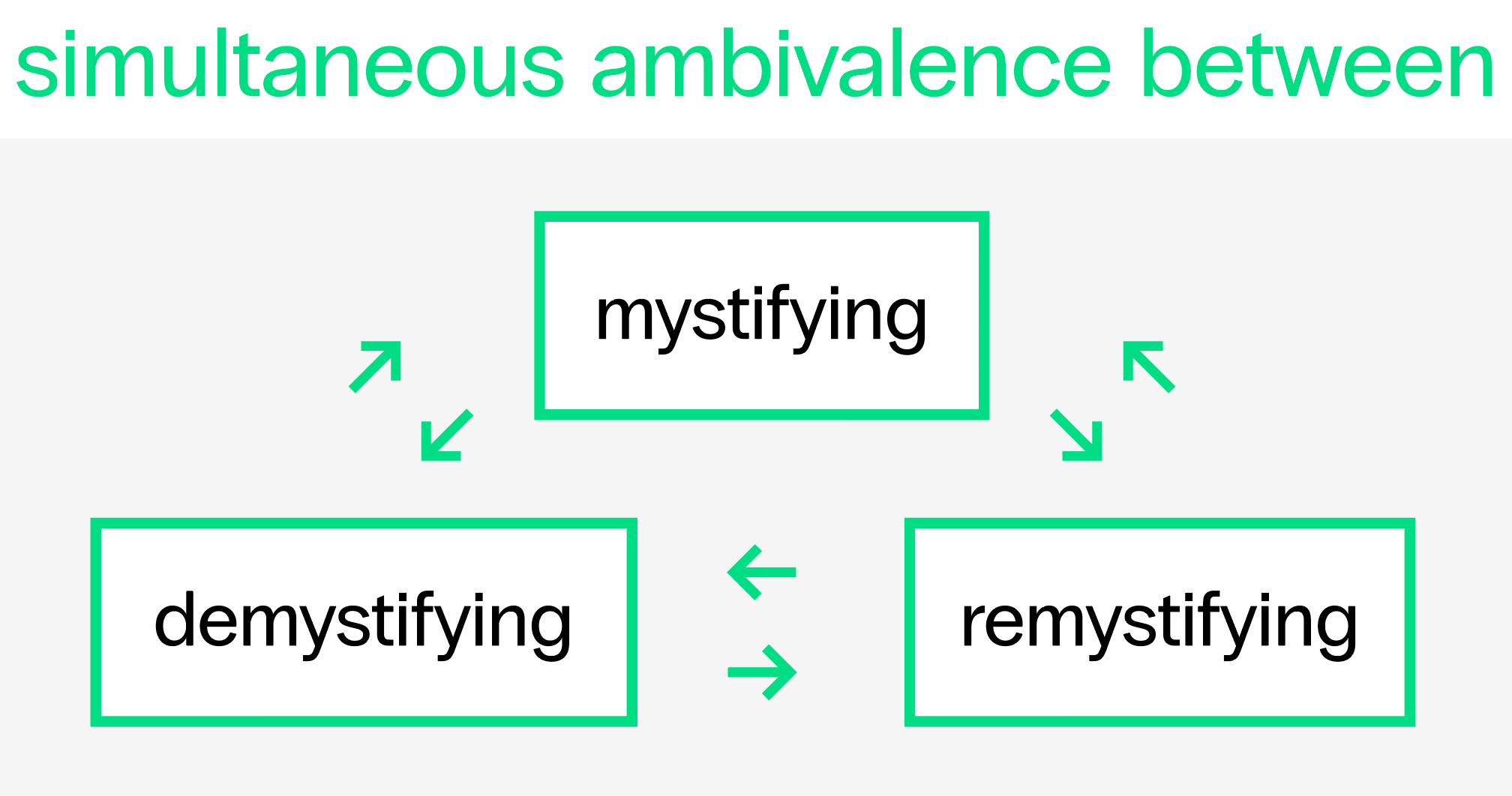
The parentheses in (de)mystifying leave open the possibility of mystifying, demystifying and remystifying at the same time. Through mystical epistemology, (de)mystifying enables an ambivalent knowledge from the experience of opacity, where the political importance of demystifying can co-exist in a mystifying encounter. Knowledge of how a system is constructed can accompany an encounter that exceeds what one can explain.
Links
You can see more of my related work on my website, as well as some articles and writing.
I may post some working papers and thinking here, but if you want to follow my work I mostly post on instagram.
References
Alvarez Astacio, P., Dattatreyan, E. G., & Shankar, A. (2021). Multimodal ambivalence: A manifesto for producing in S@!#t times. American Anthropologist, 123(2), 420–427. https://doi.org/10.1111/aman.13565
Bilodeau, B., Jaques, N., Koh, P. W., & Kim, B. (2024). Impossibility theorems for feature attribution. Proceedings of the National Academy of Sciences, 121(2), e2304406120. https://doi.org/10.1073/pnas.2304406120
Browne, K., & Swift, B. (2018). The other side: Algorithm as ritual in artificial intelligence. Extended Abstracts of the 2018 CHI Conference on Human Factors in Computing Systems, Article alt11. ACM. https://doi.org/10.1145/3170427.3188404
Burgess, M. (2024). Deceptive AI dehumanizes: The ethics of misattributed intelligence in the design of generative AI interfaces. 2024 IEEE Symposium on Visual Languages and Human-Centric Computing (VL/HCC), 96–108. IEEE. https://doi.org/10.1109/VL/HCC60511.2024.00021
Burrell, J. (2016). How the machine ‘thinks’: Understanding opacity in machine learning algorithms. Big Data & Society, 3(1), 1–12. https://doi.org/10.1177/2053951715622512
Campolo, A., & Crawford, K. (2020). Enchanted determinism: Power without responsibility in artificial intelligence. Engaging Science, Technology, and Society, 6, 1–19. https://doi.org/10.17351/ests2020.277
de Certeau, M. (1992). Mysticism. Diacritics, 22(2), 11–25. https://doi.org/10.2307/465276
Felski, R. (2015). The limits of critique. University of Chicago Press. https://doi.org/10.7208/chicago/9780226294179.001.0001
Gell, A. (1992). The technology of enchantment and the enchantment of technology. Anthropology, Art and Aesthetics, 1992, 40–63.
Lupetti, M. L., & Murray-Rust, D. (2024). (Un)making AI magic: A design taxonomy. Proceedings of the CHI Conference on Human Factors in Computing Systems, 1–21. ACM. https://doi.org/10.1145/3613904.3641954
Méloux, M., Maniu, S., Portet, F., & Peyrard, M. (2025). Everything, everywhere, all at once: Is mechanistic interpretability identifiable? International Conference on Learning Representations (ICLR 2025). https://proceedings.iclr.cc/paper_files/paper/2025/hash/51157713f1f1f572a05647e1aef1b1ed-Abstract-Conference.html
Ochigame, R., & Jones, G. M. (2026). Toward a phenomenology of mystification: The ambivalence of magic among AI technologists. Anthropological Theory, 26(3), 260–277. https://doi.org/10.1177/14634996261470761
Schmidt, L. E. (2003). The making of modern “mysticism.” Journal of the American Academy of Religion, 71(2), 273–302. https://doi.org/10.1093/jaar/71.2.273
Taussig, M. (2003). Viscerality, faith, and skepticism: Another theory of magic. In B. Meyer & P. Pels (Eds.), Magic and modernity: Interfaces of revelation and concealment (pp. 272–306). Stanford University Press. https://doi.org/10.1515/9781503620056
Yadav, S. (2016). Mystical experience and the apophatic attitude. Journal of Analytic Theology, 4, 17–43. https://doi.org/10.12978/jat.2016-4.180017240021a